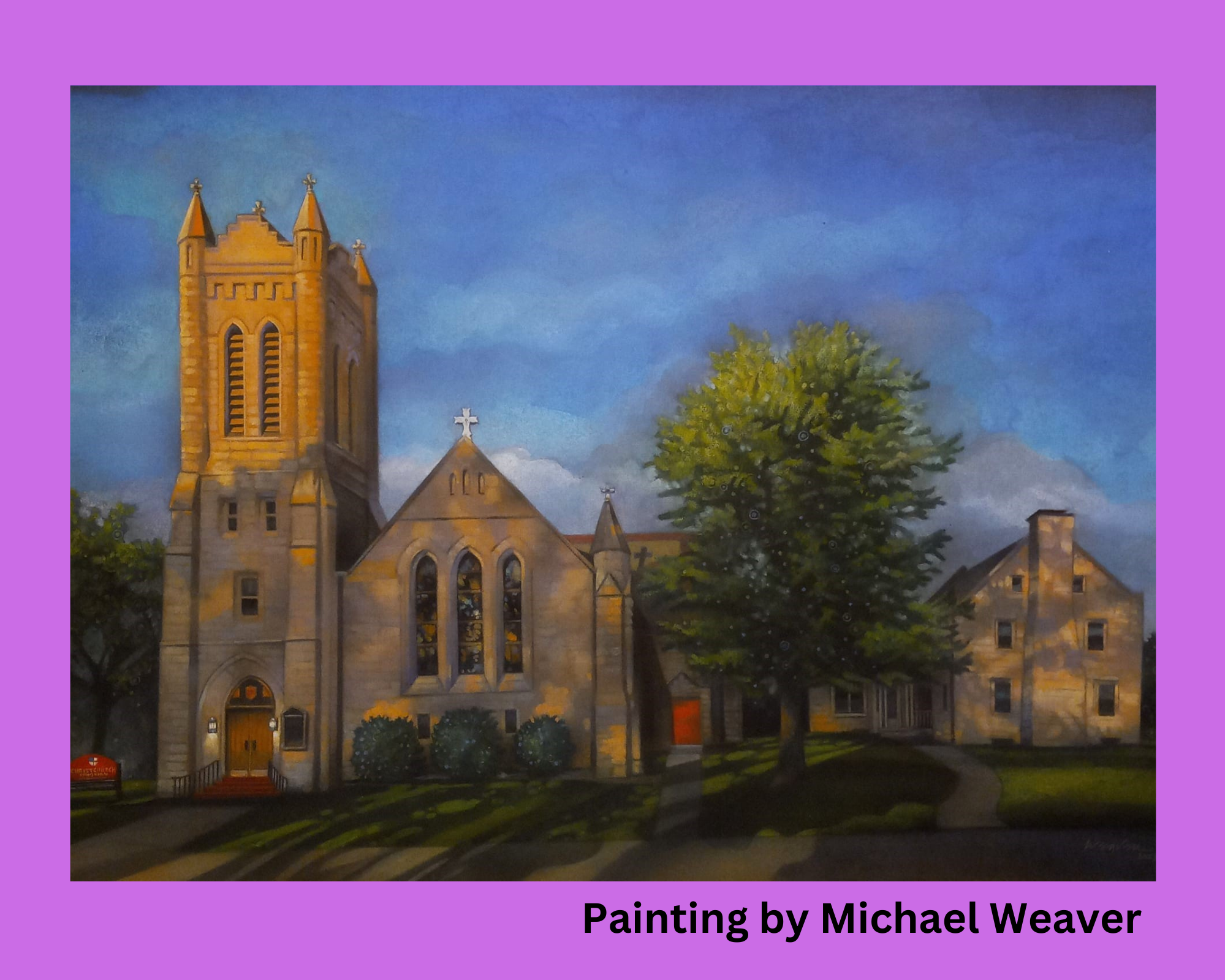
From Bishop Barker……
Almighty God, you alone can bring into order the unruly wills and affections of sinners: Grant your people grace to love what you command and desire what you promise; that, among the swift and varied changes of the world, our hearts may surely there be fixed where true joys are to be found; through Jesus Christ our Lord, who lives and reigns with you and the Holy Spirit, one God, now and for ever. Amen.
– The Collect for the Fifth Sunday of Lent
Dear Brothers and Sisters in Christ –
Lent is arriving early this year, while the sun is still reluctant to rise in the morning sky. I am saying my prayers in the dark, which feels like a fitting metaphor for the journey we are beginning today. Accepting the invitation to “keep a holy Lent” requires a certain amount of energy and discipline – two traits that can be hard to summon when we find ourselves especially tired. And I think that many of us are awfully tired just now. We are tired of daily dispiriting headlines in the news, of poor moral leadership at every level of our common life, of vulgarity and cruelty, of distrust and fear, of vulnerability and threat.
Maybe Lent is exactly what we need right now. Perhaps planning to live more faithfully and more simply in the forty days to come is exactly the cure for the feelings of weariness that impact so many of our lives in this moment. I do not suggest for one minute that we back off from whatever work we’re engaged in to bring some good news into this complicated season. Demanding moral governance from our elected leaders, protesting injustice, praying in earnest, and reaching out beyond our usual circles to befriend and serve the marginalized, are all imperatives of our faith that circle the whole church year, day in and day out. But in a season that invites us to let go, I wonder what it might look like to give up the belief that it is somehow our responsibility to personally fix what is broken in this historical moment, choosing instead to enter into that brokenness and find God there.
The truth of our human condition is that our future lies entirely in the hands of our loving God, and that we have precious little control over many of the challenges we face. To believe otherwise is an invitation to idolatry. You might start with the traditional work of this season. There is something deeply satisfying about honestly confessing the sin that is part of our human lives – our “unruly wills and affections” as the Collect above has it – and then turning anew to Jesus, to help deliver us from that bondage and lead us into a new way of living and being as creatures forgiven and free. There is something wonderful about “letting go and letting God” as we continue on a journey that, though difficult in many ways, will inevitably lead us through the cross and the tomb … to the abundant love and life of Easter day.
I pray you can find the time and energy to keep a holy Lent this year. All the inherited patterns of Lenten living that are commended to us – from praying more regularly, to fasting more determinedly, to serving Christ in others more generously – are designed to help us in some concrete way to accomplish the only truly essential work of the season: to prepare ourselves for a new encounter with the person of Jesus, crucified … and risen to new life.
The amazing truth of that paschal mystery is balm for our souls in any moment of human life, and wonderous hope no matter how careworn we might be on this day.
In Love and Faith –
+ Bishop Barker
Due to the cancellation of Ash Wednesday Services because of the weather and roads, the following is the Ash Wednesday Sermon from Father Bob.
Please email Father Bob directly at rschlismann@gmail.com for any comments or questions.
Ash Wednesday, C, March 5, 2025 (Isaiah 58:1-12, Psalm 103:8-14, 2Corinthians 5:20b-6:10, Matthew 6:1-6,16-21)
How can we summarize our Gospel from Matthew 6 today? Simply this, ‘Don’t show off/boast’! But that’s what we do, consciously or unconsciously, with either good or bad, unselfish or selfish intentions.
Would you like examples? Where should I start: attitudes? A facial expression (smirk or eye-roll), body language (gesture or flexing/puffing oneself up), locomotion (swagger or strut), tone of voice (condescension or sneer).
Why do we show off? We may have received special recognition: a reward, promotion, preference, or an expression of gratitude for something that we may (or may not) have done, for which we are proud. Who wouldn’t feel that way, having experienced an unexpected(?) change for the better in one’s status or situation? It’s understandable and tempting to proudly show off. But as Paul wrote, If you boast, boast in the Lord.(2Cor.10:17) Do thank God for your good fortune, as the Source of all good things.
Jesus named three attitudes/acts of showing off to avoid when involved in giving, praying, or fasting. Why? He encouraged the practice of each as attributes of a godly life, but when they are distorted or twisted out of context, they become the opposite of what they are intended to be.
1) Giving (alms) When done with pure motives this is noble, righteous and commanded by God for the sake of the poor and benefit of the giver. All through the Old Testament, God required the Israelites to provide for the poor among them. (Deut.15:11)
That was not changed in the New Testament. While Jesus said there always would be the poor among them (Ex.22:21, Mark14:7), He was reflecting on the general unfairness of life in a sinful, fallen world where injustice prevails, while noting that He would not be with them much longer. But that is no excuse to neglect or mistreat them! (Luke14:12-14)
By all means give but it should not be publicized. In fact Jesus taught that when you give, don’t let your right hand know what the left hand is doing! Meaning, give with right motive: discreetly, with no fanfare or attention, or the expectation of a reward. (Matt.6:3) Don’t show off!
2) Praying (communicating with God) What could possibly be wrong with prayer? Nothing, if it’s done in the way that Jesus taught. What is prayer but talking/listening to God? Yet it can seem that our prayers are more often talking/listening to ourselves.
Be still and know that I am God. (Psalm46:10) God doesn’t ‘speak’/communicate like we do. There are spectacular manifestations of God’s Presence: the thunder and lightning at Mt. Sinai; or simply the still small voice, quietly and subtly whispering to one’s mind/heart. (1Kings19:1-12) Jesus criticized and condemned making a self-righteous show and display of prayer. That does not negate praying with others (in church or elsewhere), but it does temper how it should be done and shared.
He used an example of how a Pharisee boasted about himself in his prayers, compared to a tax-collector, who simply and humbly stated, God, be merciful to me, a sinner. (Luke18:9-13) If prayers are repetitive (unless used liturgically) or mindless phrases, they are useless. (Matt.6:5-7)
3) Fasting (voluntary self-denial) Jesus condemned prideful, boastful forms or motions: like looking pained and deprived; so that when you fast and then you are asked why you look so uncomfortable, you can share how much you are suffering from your great sacrifice. No! Consider Jesus’ fast in the Wilderness and temptation by the devil for 40 days and nights. This was a genuine, total fast; not a pretense, a mere ‘fastlet’ where one skips a meal or two, or goes without water for a short time! (Matthew4:1-11; Luke4:1-13)
Until we can do similarly (not necessarily for 40 whole days!), we haven’t much business complaining over our own limited deprivation!
Each of these practices were recommended by Jesus. It’s only the prideful, boastful distortions of these acts and commitments as ends in themselves, that are harmful to us. Those are what can derail/sidetrack us.
Father Bob
Sunday Holy Eucharist @ 10:00 A.M
The Third Millennium Message, Christ Church Episcopal, Beatrice, NE
Lent, 2025
A few weeks ago I preached a sermon that began with this question (paraphrased),
‘Why do we do what we do in the way that we do it?’ referring to the lectionary text from Nehemiah 8. Without repeating the whole homily, the context of the passage was a mass worship service held in Jerusalem to celebrate the rebuilding of the city walls, the repopulation of the city and its immediate area. (c.444 BCE)
This was not without opposition from some of the peoples that already lived there. There was strong resistance from Samaritans (the north part of old Israel, the former Northern Kingdom), who by then were a hybridized religious mix of pagans brought in to repopulate that area and interbred with the remaining Israelites after the majority of those Northern Israelites (the so-called ‘Ten Lost Tribes’) had been deported/dispersed by the victorious and dominant Assyrians. This was Assyria’s resettlement policy with vanquished peoples. Samaritans’ opposition to these returning Jews (because, in part, those Jews did not want the Samaritans’ volunteer help to rebuild Jerusalem’s walls since these Jews considered Samaritans as no longer ‘pure’ Israelites) was a major source of the enmity between them that was hundreds of years old by the time of Christ.
Also opposing the Jews’ returning from Babylon were their local pagan neighbors, the Ammonites. (who lived east of the Jordan River and were descended from Abraham’s nephew, Lot)
Even some of the remaining local Jews resisted this resettlement by their kindred Jews formerly deported by the Babylonians, who had replaced Assyria as the dominant regional power.
After Babylon fell, the new Persian masters who had conquered them looked favorably on the dispersed Judeans, whose resettlement of Jerusalem they now encouraged. The last thing that the Samaritans, Ammonites, and some of those local Jews wanted to see was a revival of the Southern kingdom of Judah’s power/influence with its stricter interpretation of the Mosaic Law. (keeping the Sabbath, and enforcing ethnic marriage purity)
I want to underscore an interesting irony. Today in 2025, of Israel’s many enemies, who are the most zealous to destroy them? One could accurately say radical Islamists including but not limited to terrorist groups like Hamas, Hezbollah, Houthis, PLO, al Qaeda, and ISIS. But who is their powerful national backer? Iran. And what is Iran but modern Persia?
2,500 years ago, the Jews’ biggest supporter was the Persian Empire. Of all the kingdoms/empires which had made Israel’s collective life miserable over the millennia – Egyptians, Philistines, Syrians, Assyrians, Babylonians, Greeks, Romans, and many Europeans states since then – it was Iran/Persia, led by kings such as Cyrus and his successors, and the monotheistic Zoroastrian religion which many of them followed, that had been Judah’s greatest friends. The difference that 2,500 years and a significant change of religion can make!
Nehemiah the governor and Ezra the head priest were both appointees of the Persian king, Artaxerxes. To get this work done took years, but they finally persevered over the local resistance to the resettlement of their fellow Jews returning from Babylon. They reinstituted the great Feast of Tabernacles/‘Booths’, which commemorated Israel’s deliverance from Egypt with God leading them through the wilderness and ultimately settling in Canaan. This feast also had become a harvest celebration, a time of sharing and thanksgiving.
They assembled in a great worship service. A large part of it was devoted to the proclamation/reading and exposition/teaching of the Law/God’s Word. This took hours. We present-day Christians have it easy!
The chief priest Ezra led that part of the service. As he opened the scroll to read the people stood out of reverence and respect for the Word of the Lord – as we do for the Gospel that contains the very words of Jesus. The people were convicted by hearing what they did not know, and also by what they knew but had neglected. At the conclusion, Ezra and other leaders comforted and reassured the vast congregation that God had heard them, blessed them, asked them to depart in peace, rejoice, feast, and to share with their neighbors.
From this emphasis on assembling to hear the scriptures – being taught what they meant and how to live accordingly – developed the local synagogue. To attend the central temple wasn’t something that a nonresident of Jerusalem could do easily/weekly (just on special occasions, like Passover). Local congregations developed, led by specially-trained teachers, rabbis; while the priests continued the sacrificial worship held at the temple.
Hundreds of years later, this rebuilt temple was greatly expanded under king Herod but was eventually destroyed by the Romans in 70 CE during the Jewish Revolt. That temple was never rebuilt. Once the sacrificial system of worship disappeared; there was no further need for an intercessory, mediating, sacrificial priesthood. But teachers/rabbis (some of whom became the Pharisees and Sadducees) remained and the synagogue assumed the day-to-day, week-to-week focal point of worship and spiritual life of the local communities.
The earliest Christians were Jewish. They worshiped at the local synagogues and at the temple when they could (and were allowed), just as Jesus did. But that changed once numbers of Gentiles began to convert. Because of this the Church became more distinct and inclusive than their strictly Jewish forbearers.
As non-Jewish Christians began to separate from other Jews, they developed their own distinct identity and ‘brand’ of worship while still based on the dual system of Jewish worship: Word of God (synagogue) and Sacrifice (temple). But now, the once-for-all-time Sacrifice of Christ as commemorated by weekly frequent Holy Communion replaced the constant bloody animal sacrifices. The sacraments of baptism and Communion supplanted the old ordinances of circumcision and Passover. This developed into the worship we follow today.
The entire Christian service became known by several names as regional traditions developed over time: Eastern Orthodox – ‘Divine Liturgy’; Roman Catholic – ‘Mass’; Lutheran – ‘Divine Service’; Episcopalian/ Anglican -‘Holy Eucharist. (Greek: eucharistia -‘thanksgiving/gratitude’) But they all applied to the same thing.
I. The first section of the entire service of ‘The Holy Eucharist’ (as Episcopalians call it) was identified as The Service/Liturgy of the Word or ‘Synaxis’ (‘gathering/assembly’), which emphasized the proclamation of the Word of God through the reading, preaching, and teaching of scripture, along with the Living Word, Christ. What follows is sometimes called a ‘Guided Mass’, a list of the components of the service with brief comments.
The elements of this Liturgy of the Word/‘Word of God’, (BCP, p.355, Rite 2) include:
Opening Hymn (normally beginning with a procession leading to the altar)
Salutation (‘Blessed be God, Father, Son, and Holy Spirit…’ or a similar seasonal, thematic greeting)
Collect for Purity (‘Almighty God, unto whom all desires are known…’ except during penitential seasons)
Gloria in excelsis Deo (‘Glory to God in the Highest…’ except during penitential seasons)
Collect of the Day (a thematic prayer that sets the ‘mood’ of the service)
Lessons (assigned scripture passages from the three year cyclical lectionary, sometimes with options):
First Reading: Old Testament (or Apocrypha. During Eastertide the reading is from Acts), Psalm or Canticle
Second Reading: Epistle (letters from Paul, Peter, John, or James)
Gradual/‘Sequence Hymn’ (the Gospel Book is carried in procession and read among the people)
The Holy Gospel (all stand for this reading)
Gradual (as the Gospel Book is returned to its central place on the altar)
Homily/Sermon (usually a commentary based on one or more of the assigned lectionary texts)
Creed (Nicene or Apostles’, can measure the preacher’s adherence to orthodox biblical historical teaching. Apostles’ Creed is read for services of baptism or the Daily Office. Nicene Creed is read for the Holy Eucharist.)
Prayers of the People (several options; can include prayer concerns from the congregation)
Confession of Sin and Absolution (the latter conveys God’s forgiveness and pardon)
(Note: During the seasons of Advent and Lent, the Penitential Order, which includes the Confession of Sin and Absolution, may be placed at the beginning of the service, immediately following the first hymn.
The Collect for Purity and the Gloria are omitted, replaced by the Trisagion [‘Holy God, Holy and Mighty…’] during Lent, or the Kyrie [‘Lord have mercy…’] during Advent.)
The Peace (‘The Peace of the Lord be always with you…’)
This is an ancient greeting which can conclude the Service of the Word: a greeting/blessing exchanged by the congregation, shared between brothers/sisters of Christ. Ideally any grievances should be left behind in this brief sharing of the love of Jesus. (Sadly over the years I have seen a few people so embittered toward each other that they actually turned their backs on the other person during the Peace. Simply since some choose to profane the Peace by such shameful behavior does by no means invalidate nor should discourage its practice.)
Sharing the Peace is an ancient Near East custom, consistent with the practices of hospitality at the time. The oldest biblical record of which I am aware was when Boaz, an Israelite farmer and landowner, greeted his field workers in this manner. In turn, they returned that greeting. (Ruth 2:4) Boaz eventually married Ruth, the faithful Moabite widow. They became the great-grandparents of David, ancestors of Jesus Himself. (Ruth 4:18-22) That makes this holy greeting at least 3,000 years old, and truly is an ancient part of our worship! The Peace concludes The Service of the Word and serves as a transition point which looks to the Holy Communion soon to follow. Many churches also use this time for a welcome, announcements, recognitions (anniversaries, birthdays, etc.), although placement of the Peace at this point is not required.
Once the Peace and announcements have been concluded (along with any instructions concerning the Communion), the following or something like it may be said to prepare the congregation for what comes next:
Offertory Sentence (such as, ‘Walk in love as Christ loved us, and gave Himself for us…’)
Offering (‘Collection’ of offerings from the congregation)
Doxology (The gifts are brought to the altar. The hymn is omitted during penitential seasons.)
The ‘Service of the Word’ or ‘The Word of God’ contributes to the flow/sequence of the whole service. Unlike non-liturgical/non-sacramental evangelical, fundamentalist, and Pentecostal churches, and like Catholic and Eastern Orthodox churches, Episcopal/Anglican churches do not consider the sermon (although important in itself) as the highlight or central point of the service. Along with everything else, the homily points us toward the Holy Communion.
(As an aside, this is why the Altar upon which the Eucharist is celebrated is located at the front and center of the church, rather than having the pulpit at that prominent position. [Pulpit and the lectern for the reading of scripture flank either side of the altar] The sermon, as with the other components of the Service of the Word, prepares and directs one’s attention toward the reception of the Sacrament in the Eucharist.)
II. The second section of the service, called The Holy Communion, features the celebration of the Holy Eucharist, the details of which have developed over the centuries, but has utilized its principal elements for virtually the whole life of the Church – with refinements gradually added over time. These developments were not the result of a ‘worship committee’ deliberation or the dictates of a single person but were a restoration, continuation, and adaptation for the needs of a whole new religion, Christianity.
There is no question that early Christians celebrated the Lord’s Supper/Holy Communion on Sundays, the ‘Lord’s Day’ (His Resurrection), and as often as they could, including special occasions called ‘Feasts.’ The 1979 Book of Common Prayer ‘officially’ restored this practice, in which many churches already had been engaged, clarifying that, ‘The Holy Eucharist (is) the principal act of Christian worship on the Lord’s Day/ Sunday, and on all major Feasts.’ (BCP, p.13)
Nowadays it is unusual for a congregation to not celebrate weekly Communion, unless there is no priest. In churches without a regular priest, pre-consecrated elements of bread and wine may be distributed by a deacon who officiates at what informally is called a ‘Deacon’s Mass,’ depending upon the preference of the bishop. If that is not permitted, one can have Morning Prayer as a substitution for the Holy Eucharist.
The liturgy of the Church evolved/developed according to the needs, practices and customs of the times. Christian Jews originally worshiped at both synagogue and temple until they continued to grow with far more Gentiles converting to Christianity than Jews. Once the Temple was destroyed in 70 CE, it became a moot point. The choice was made for them since there was no more temple and no more Jewish/Israelite priesthood.
But unlike Jews, whose sacrificial worship was abruptly eliminated, the Christian focus was upon that which all the countless numbers of temple sacrifices over the centuries had anticipated: Jesus’ once-for-all-time sacrifice on the cross as the substitutionary Atonement for the sins that we all bear. This unbloody ‘sacrifice of praise’ was represented in every Holy Eucharist. With Jesus’ death, animal sacrifice and its sacrificial priesthood were rendered redundant/unnecessary. The Eucharist was a more-than-sufficient replacement and far more readily accessible, having become a local practice at every assembly. Each Christian assembly (ekklesia) now served both synagogue and temple functions by incorporating the key emphases of both.
Ancient Christian worship differed markedly in one practice which is no longer retained and hasn’t been for 1,500 years. Then, like today, anyone, baptized or not, member or not, could attend a Service of the Word. But upon its conclusion, during the ‘intermission’ between the two sections of the Word and Sacrament, those non-Christians, non-baptized persons, persons under church discipline, and even catechumens (those receiving formal instruction in preparation for baptism), were all dismissed and required to leave. Then the second part of the service moved forward, The Holy Communion. (‘Liturgy of the Faithful’)
This had certain advantages:
1) ensure (but could not guarantee) that only the more committed and informed baptized and professed Christians would be present and permitted to receive Communion.
2) helped to ‘Fence the Table’ – a much later Reformation term/practice that ‘guarded’ the Table to prevent the altar and elements of Communion from being profaned by those judged ‘unworthy’ to receive it.
3) In the Western Church this also became a physical barrier that developed into an altar rail to prevent wandering or stray animals from desecrating the sanctuary/altar area!
(Note: Eastern Orthodox churches have an iconostasis [Greek: ‘ikon screen’], a decorative wall of icons [sacred pictures of Christ, saints, angels, and sacred events] that separate the congregation from the Holiest of Holies, represented by sanctuary which housed the altar. It symbolizes the curtain in the Jerusalem temple that divided the Most Holy Place [where the Ark of the Covenant/Tablets of the Ten Commandments once reposed] from the Temple proper. Only the high priest could enter this ‘Holy of Holies’, and that but once a year on Yom Kippur, the Day of Atonement [September or October]. I mention this only to say that the practice of a having physical barrier separating the altar from the congregation was a similar thematic feature for different reasons in Eastern Orthodox and Western Catholic [and Protestant] branches of Christianity.)
But the disadvantages of enforcing this exclusive approach of barring and dismissing those forbidden from receiving Communion make me wonder whether the effort and resulting perceptions were worth it. Wouldn’t that almost guarantee bad press/public relations/PR? It could (and did) breed feelings of:
1) resentment (‘Oh, are we not good enough to be present?),
2) suspicion/confusion (‘What’s going on in there that we are not allowed to witness?’), 3) misunderstanding on the part of those excluded, and by non-Christians who would not have been present anyway, or those hostile to the Church (‘It must be something terrible like human sacrifice/cannibalism!’)
This was especially the case when one is not favorably disposed to a group and their strange ideas in the first place, and looks for a reason to believe the worst about them. It was only reinforced once rumors circulated about Christians ‘eating’ Jesus’ body and ‘drinking’ His blood. This craziness is a religion of love and peace? Hardly! Persecution was only a short step away.
As time passed these prohibitions fell, especially after Christianity became tolerated and legalized by the Roman emperor Constantine (313 CE, Edict of Milan) and then as the state religion by the emperor Theodosius (380 CE, Edict of Thessalonica). People began to be baptized into the Church in much greater numbers after it received the emperor’s favor and support, as it became socially and politically advantageous (and much safer).
Certainly people became Christians for spiritual reasons as well, with many genuine conversions; but the times and circumstances were changing. The Church needed to adapt to this new increased influx of ‘believers.’ So the separation and barriers came down. All parts of the service became open to the public, regardless of whether the congregants were Christian of whatever degree, or not at all.
Observance of ‘Close Communion’ is a present-day remnant of the ancient practice of disbarment. If you are not a part of our group and accept our interpretation and authority, then you may not partake of it. This is done to protect the purity of doctrine and practice, but can be selective and inconsistent in its application. Still, Close Communion is followed by several denominations to this day. (some are large: Eastern Orthodox, Roman Catholic; also smaller groups of conservative Lutherans and confessional ‘reformed’ Presbyterians)
Observance of ‘Open Communion’ shifts the balance from the person being judged by the group as to their ‘worthiness’ for being allowed to receive Communion, to that individual’s own inner self-judgment. Everyone is welcome to attend/witness/participate in the whole service. Many denominations recognize this practice, as do we. Since I cannot judge one’s heart, motives, or their personal standing with God, therefore, you must examine yourself as to whether you should receive Communion or not. God will judge you for your decision, not me. (1Corinthians11:27-30) So choose wisely!
(However, if there is blatant outward sin or hatred on the part of the recipients, the priest is permitted to refuse this person Communion; but that is a very rare option. I have never done it. If Communion is denied, the priest must inform their bishop within 14 days as to why. [BCP, p.409] That’s how seriously this is taken.)
These are the elements of the second part of the Service of the Holy Eucharist, The Holy Communion/ ‘The Liturgy of the Faithful’, which include:
Preparation (the articles of Communion are arranged on the altar)
Presentation (of the Offering to God, ‘All things come of Thee, O Lord…’)
The Great Thanksgiving, includes:
Salutation (‘The Lord be with you…’)
Sursum corda (‘Lift up your hearts…’),
Proper Preface (prayer determined by the occasion or season),
Sanctus (‘Holy, Holy, Holy Lord…),
Benedictus (Blessed is He…’)
Words of Institution (‘This is My Body…this is my Blood’)
Prayer of Consecration, includes:
Memorial Acclamation (‘Christ has died…Christ is Risen…’),
Epiklesis (‘invoke/call down’ the HS to transform the bread and wine into the Body and Blood of Christ),
Great Amen (Elevation of the consecrated Host)
The Lord’s Prayer (‘Our Father…’)
Fraction/Breaking of the Bread (‘Christ our Passover is sacrificed for us’), no ‘Alleluias’ in penitential seasons
(Options after the Fraction during Penitential Seasons [Advent and Lent, or on special occasions] include:
Agnus dei [‘Lamb of God…have mercy upon us’{x3}],
Prayer of Humble Access [‘We do not presume to come to this, Thy Table…’] )
Invitation to receive Communion (‘The Gifts of God for the People of God…’)
Reception of Communion by the congregation (‘The Body of Christ…The Blood of Christ’)
Post-Communion Prayer
Blessing (by the priest or bishop, offered ‘free-style’)
Concluding Hymn (usually as a recessional)
Dismissal (‘sending forth’, by a deacon, if available)
Less complicated and daunting than it appears on paper, the liturgy has a beautiful, sequential and natural flow to it, no matter which ‘version’ is used. In one form or another, this general order of The Holy Communion service has been in use for many centuries. The basic components date back to the early Church. It has withstood the test of time and is packed with holy scripture and scriptural references.
Why discuss worship during Lent? Advent and Lent both are penitential seasons. Lent seems more reflective since it is very somber. Advent is more anticipatory since it ends with the joyful Birth of Christ. Lent ends with the crucifixion, death, and burial of Christ. As Easter follows directly after Lent/Holy Week, death must precede resurrection. What can be more suitable than to follow Jesus’ mortal journey on earth than through prayer and worship?
So this question of, ‘Why do we do what we do in the way that we do it?’ is especially appropriate for contemplating and understanding our worship services at this time of year.
May we all experience a Holy Lent.
Faithfully in Christ,
Father Bob +
—
Christ Church Episcopal Office
Beatrice NE
Carolyn Hovendick
 | Reply allReplyForwardYou can’t react with an emoji to a large group |
 Christ Church Episcopal